Basic tips on how to make a bar soap at home
By Cynthia Lodite, January 17, 2026Soap is made from a combination of a fat and an alkaline material, which react through a chemical process called saponification.
Saponification makes a substance that can combine with both water and oil.
To make soap at home, you’ll need the two elements for saponification: a fat and an alkaline material. Notably, any fat will do, from olive oil to lard to coconut oil, but different fats give the soap different properties.
Ingredients and equipment
- coconut oil (helps to produce lather)
- olive oil
- other liquid oil – like almond oil, grapeseed, sunflower or safflower oil
- ¼ cup lye – also called 100% sodium hydroxide
- ¾ cup cool water (use distilled or purified)
- Quart canning jar
- Pint canning jar
- Soap molds
- Gloves and protective goggles
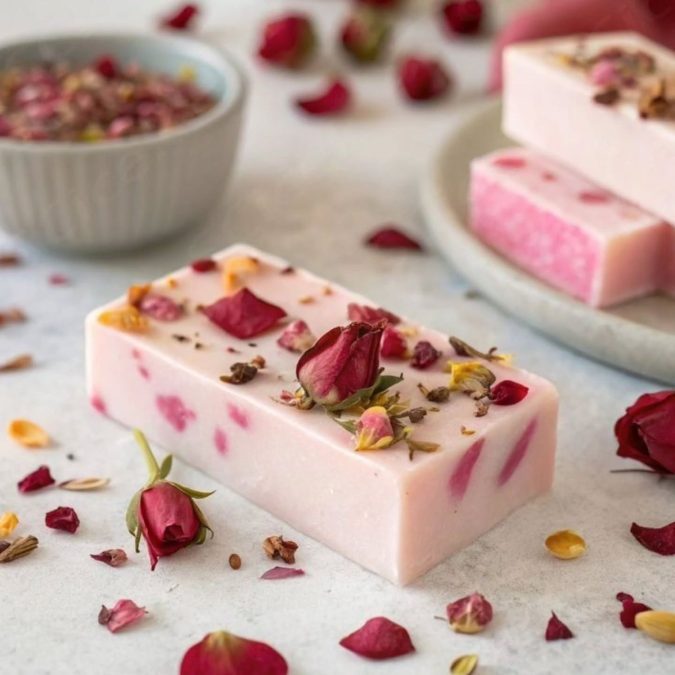
There are three main methods for making soap at home.
Melt and pour: This involves purchasing a soap base, melting it down, and adding the desired ingredients, such as fragrances and essential oils, then pouring the soap into a mould.
The saponification has already happened, so you don’t have to worry about handling lye, and the soap can be used immediately after it has cooled. This is a good option if you want to involve kids in your soap-making process.
Cold process: This involves making soap from scratch using lye and fat. There is no heating involved, but the soap will need 4 to 6 weeks to cure so that saponification is complete and all the lye is gone.
Hot process: This also involves making soap from scratch. Heat, from a crockpot for example, is used to speed up the saponification, so the soap can be ready in as little as a week.
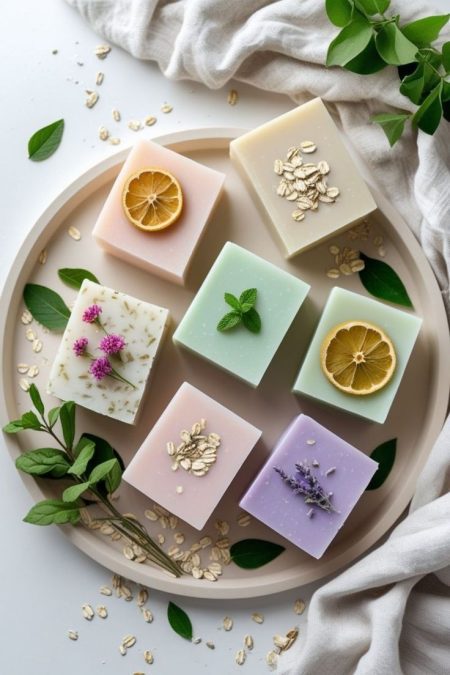
Instructions
Step 1: Cover your work area. Put your gloves and other protective wear on. Measure your water into the quart canning jar. Have a spoon ready. Measure your lye, making sure you have exactly ¼ cup.
Slowly pour the lye into the water (never the water into the lye), stirring as you go. Stand back while you stir to avoid the fumes. When the water starts to clear, you can allow it to sit while you move to the next step. It will generate heat as the chemical reaction occurs.
Step 2: In the pint jar, add your three oils together. They should just make a pint. Heat in a microwave for about a minute, or place the jar of oils in a pan of water to heat. Check the temperature of your oils – it should be about 120°F or so.
Although you can use a soap-maker thermometer, a regular meat thermometer will also work. Your lye should have come down by then to about 120°F. Wait for both to cool somewhere between 95°F and 105°F. This is critical for soap making. Too low and it’ll come together quickly but be coarse and crumbly.
Step 3: When both the lye and oils are at the right temperature, pour the oils into a mixing bowl. Slowly add the lye, stirring until it’s all mixed. Stir by hand for a full 5 minutes with any spoon or spatula that is heat-resistant.
It’s very important to get as much of the lye in contact with as much of the soap as possible. After about 5 minutes, you can keep stirring, or you can use an immersion blender. The soap mixture will lighten in colour and become thick. When it looks like vanilla pudding, it’s ready.
Step 4: Add your herbs, essential oils or other additions. Stir thoroughly to combine. Pour the mixture into mould(s) and cover with plastic wrap. Set it in an old towel and wrap it up. This will keep the residual heat in and start the saponification process.
Step 5: After 24 hours, check your soap. If it’s still warm or soft, allow it to sit another 12 to 24 hours. When it’s cold and firm, turn it out onto a piece of parchment paper or baking rack.
If using a loaf pan as your mould, cut into bars at this point. Allow soap to cure for 4 weeks or so. Be sure to turn it over once a week to expose all the sides to air, or put it on a backing rack to allow air to circulate.
Step 6: When your soap is fully cured, wrap it in wax paper or keep it in an airtight container. Handmade soap creates its own glycerine, which is a humectant, pulling moisture from the air.
It should be wrapped to keep it from attracting dust and debris with the moisture. Clean your equipment that has been exposed to lye. You can neutralise the lye with white vinegar, then wash the equipment well as you normally would.