Shopping adventure: Can Gikomba vibe and culture survive modern redevelopment?
By Ascah Mwango, April 1, 2026If you have ever gone “just to look” at Gikomba and ended up leaving with a bag you did not plan for, slightly lighter in cash but significantly richer in confidence and outfits, then you already understand that this is not an ordinary marketplace. It operates less like a place you schedule and more like a place you surrender to.
Time bends, budgets stretch, and somehow your “I’m not buying anything today” turns into “this was a good deal, actually” before you even realise what happened.
The conversation around Gikomba Market and its redevelopment has increasingly been framed in the language of improvement, modernisation, and long-overdue order. Yet beneath those well-intentioned objectives lies a more delicate reality that often gets overlooked.
Gikomba is not simply a collection of stalls that can be rearranged into neat rows. It is a deeply entrenched economic and social system that has evolved organically over decades.
It has been shaped by the daily decisions, risks, and improvisations of thousands of traders. These traders have learned to operate within its informal rhythms in ways that no external design can fully anticipate or replicate.
Youth Culture, thrift, and the plug economy
Gikomba today sits at the centre of a vibrant youth-driven thrift culture that has quietly evolved into a lifestyle rather than just a shopping habit. Young people actively curate their wardrobes through second-hand pieces that feel unique, expressive, and often more affordable than mainstream retail.
This culture has been amplified by social media platforms where haul videos, styling clips, and “plug” recommendations circulate widely. These trends have turned certain traders into unofficial influencers whose stalls become destinations in their own right.
Within this ecosystem, the idea of a “plug” carries real weight. A trusted trader who consistently sources good-quality, fashionable items at fair prices becomes more than just a seller. They become a gateway to style for repeat customers who rely on them to keep up with trends without overspending.
This relationship-based commerce thrives on familiarity, word of mouth, and reputation rather than formal advertising. Many young shoppers return to the same spots or follow recommendations from friends and online creators who document their Gikomba finds.
For many youth, thrifting at Gikomba is also about identity, experimentation, and creativity. The market allows them to mix and match styles, explore vintage looks, and build outfits that feel personal rather than mass-produced. All of this happens while staying within budget. This accessibility has helped shape a generation that views second-hand fashion not as a compromise, but as a deliberate and often preferred choice.
An ecosystem that thrives on informality
At its core, Gikomba functions as a highly adaptive marketplace where informality is not a weakness but a defining strength. It allows entry with minimal barriers and enables rapid transactions without excessive procedural delays.
It accommodates a wide spectrum of traders ranging from large-scale wholesalers to individuals who begin with little more than a small bundle of second-hand clothes and a willingness to engage customers through negotiation and trust. It is precisely this openness that has made the market one of the most important entry points into entrepreneurship for many Kenyans.
This is especially true for young people who are looking for affordable, on-trend clothing that does not demand the kind of budget associated with formal retail outlets.
The vibe
Beyond the economics, Gikomba carries a distinct energy that is hard to replicate anywhere else in the city. It is a kind of controlled chaos where music from nearby stalls blends with the constant chatter of bargaining voices.
Traders call out prices in quick succession. Young shoppers move with a clear sense of purpose, scanning rails of clothes for hidden gems. In this space, style is not dictated by price tags but by the ability to spot something unique at a fraction of what it might cost elsewhere.
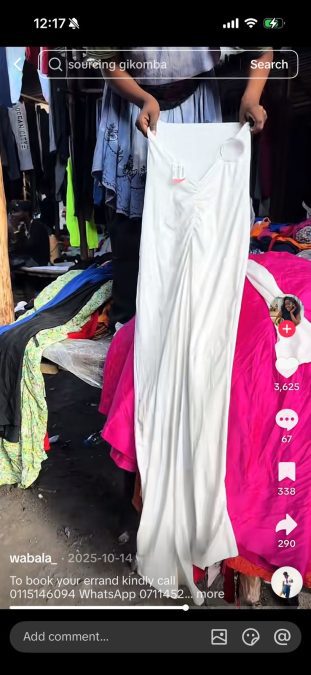
This is why Gikomba has quietly remained a go-to destination for students, creatives, thrift enthusiasts, and anyone who enjoys the thrill of finding a standout piece without stretching their wallet.
Efficiency hidden inside the hustle
What may appear to an outsider, or even to a policymaker observing from a distance, as congestion or disorder is in practice a form of decentralised coordination that has developed over time.
Traders understand their positions. Customers know where to find particular goods. Intermediaries facilitate the movement of stock with remarkable speed. This creates a dynamic flow of goods and services that relies less on rigid planning and more on constant interaction, reputation, and experience. Even the pricing of items becomes a fluid process shaped by negotiation rather than fixed labels. This allows the market to adjust continuously to supply, demand, and purchasing power in ways that are difficult to achieve in highly regulated environments.
Redevelopment and the question of access
The push to redevelop the market, including the clearing of structures along riparian land and the introduction of structured trading spaces, is often justified on grounds of safety, environmental restoration, and long-term organisation.
These are valid considerations given the recurring fires, drainage challenges, and overcrowding that have affected the area for years. However, the practical implications of such changes introduce new layers of complexity. Formalised systems tend to come with allocation processes, rental requirements, and spatial limitations.
These may inadvertently reshape how easily young and small-scale traders can access space and continue participating in the market in the same flexible way they currently do.
The cost of transforming informal systems
One of the less discussed consequences of transforming a market like Gikomba is that formalisation, while improving structure and safety, can also alter the very mechanisms that make the market accessible. Introducing fixed stalls and regulated spaces often replaces adaptable arrangements with defined boundaries.
This reduces the ability of traders to expand, shift, or negotiate space according to changing circumstances. In doing so, it risks converting a highly responsive trading environment into one that operates on predetermined conditions.
These conditions may not fully align with the fast-moving, budget-conscious nature of youth-driven fashion culture that has made Gikomba such a popular stop for affordable and trendy finds.
The reality of demolitions
The recent demolitions carried out in parts of the market, particularly around areas linked to riparian land reclamation, have had immediate and tangible consequences for traders.
Many suddenly found themselves facing the loss of stock, disruption of operations, and uncertainty about where and how to resume their businesses. Authorities maintain that such actions are necessary to enable proper planning and environmental protection.
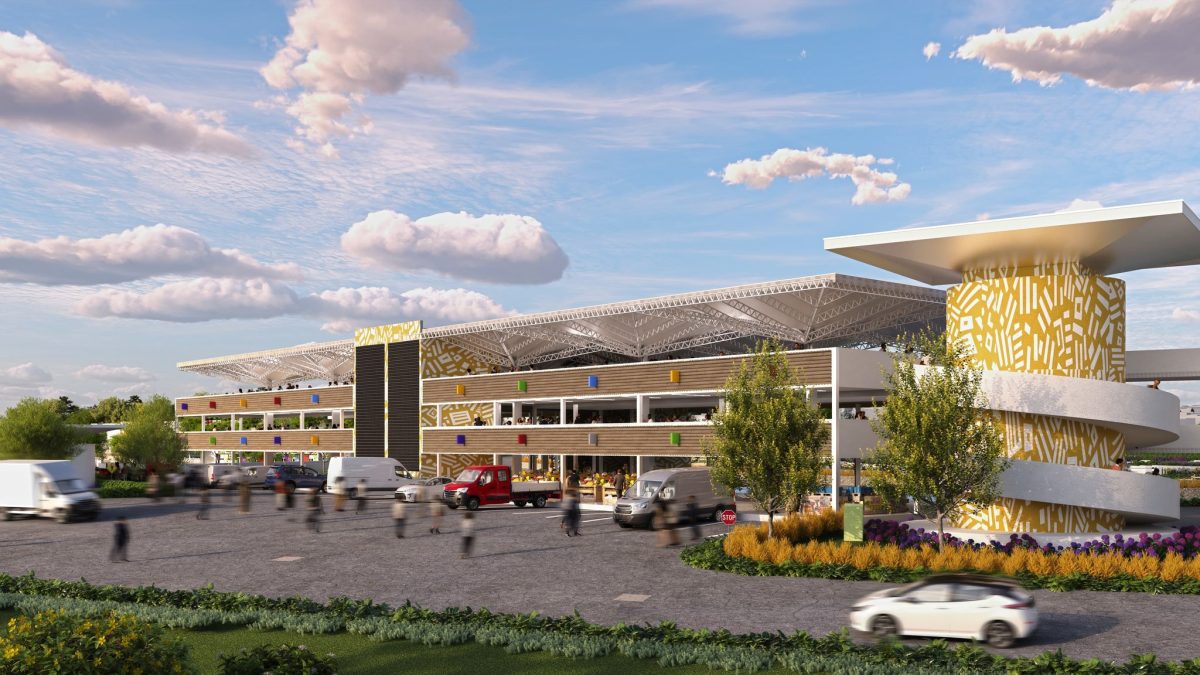
However, the timing and execution of these demolitions have raised concerns among traders. Some argue that the process has, in certain cases, gone beyond agreed boundaries or lacked sufficient preparation to cushion those affected. This has created a moment of tension between the promise of long-term improvement and the realities of short-term disruption.
Balancing order
There is no dispute that Gikomba requires improvements in infrastructure, safety measures, and overall organisation, particularly given its history of fires and overcrowding.
However, the challenge lies in implementing these changes in a way that preserves the accessibility, affordability, and vibrant atmosphere that have made the market such an important destination for everyday fashion seekers.
A modernised market may offer better physical conditions. At the same time, it must retain the sense of openness and spontaneity that allows young shoppers to walk in, explore freely, and walk out with something stylish without feeling priced out or constrained by rigid systems.