Bleach, blood, and survival: why The Cleaning Lady is quietly taking over Netflix in Kenya
By Ascah Mwango, April 13, 2026Bleach and a crime scene are what The Cleaning Lady reduces life to, stripped down, uncomfortable, and impossible to ignore. It takes the idea of survival and pushes it into spaces most shows would rather glamorise or avoid, replacing polish with pressure and certainty with constant moral hesitation. What you are left with is not spectacle, but consequence, unfolding one decision at a time.
What is even more striking is how the show has managed to sit at the top without the usual digital noise that normally manufactures popularity. No TikTok obsession, no viral clips doing the rounds, no online crowd declaring it a must-watch before you have even formed your own opinion.
The show’s popularity in Kenya comes down to a combination of relatability, strong emotional stakes, and sheer watchability. It tells a story that feels both distant and familiar at the same time, blending high-stakes crime with everyday struggles in a way that keeps viewers engaged.
When survival stops being neat and starts getting messy
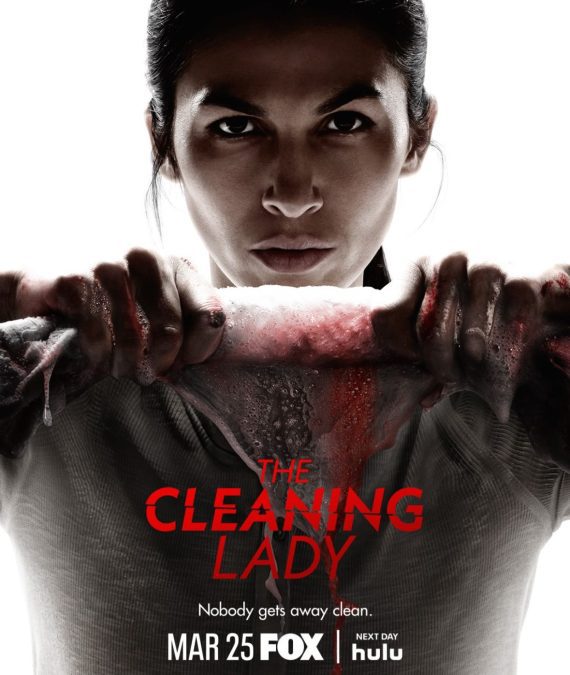
At the centre of the series is Thony De La Rosa, played by Élodie Yung, a Cambodian-Filipino doctor who finds herself in the United States as an undocumented immigrant. Her life has already taken a sharp detour from what it was supposed to be, but things spiral further when her young son falls critically ill and requires expensive treatment that she cannot legally or financially access.
What begins as a story about sacrifice quickly transforms into something darker and more complicated. After witnessing a violent crime, Thony is pulled into the world of organised crime, not as a criminal mastermind, but as someone who cleans up the aftermath. Bloodstains, evidence, consequences, she becomes the invisible force that erases the mess others leave behind.
The brilliance of the premise lies in how grounded it feels despite its intensity. This is not a character chasing power or thrill; this is someone reacting to circumstances, making decisions that feel wrong but also, in a strange way, understandable. The show does not ask you to agree with her choices, but it quietly challenges you to admit that you understand them.
Why Kenyan audiences are locked in
One of the strongest reasons The Cleaning Lady has found such a firm footing in Kenya is that its emotional core aligns closely with lived realities that many viewers recognise. Beneath the crime and suspense is a very familiar story about resilience, sacrifice, and doing whatever it takes to survive.
There is something deeply relatable about a highly skilled woman being forced into work far below her qualifications, simply because life has not given her the luxury of choice. That quiet frustration, that constant negotiation between dignity and necessity, is something many people understand without needing it explained. The show taps into that space with surprising accuracy.
At the same time, the emphasis on family, particularly the lengths a parent will go to for their child, resonates strongly. In a culture where family responsibility is often central, Thony’s decisions, no matter how extreme, feel rooted in something emotionally authentic rather than purely dramatic.
Fast, tense, and just chaotic enough
The show’s pacing is one of its strongest assets. It does not believe in easing you into the story gently. Instead, it throws you straight into high-stakes situations and trusts that you will keep up.
Each episode carries enough tension to make stopping feel like a bad decision. You tell yourself you will watch one more episode, just to see how things play out, and suddenly you are negotiating with your sleep schedule like it has done something wrong.
There is a certain chaos to the storytelling, but it works in its favour. It mirrors the unpredictability of Thony’s life, where nothing is stable, and every decision has consequences.
A performance that keeps it believable
If the show manages to stay emotionally engaging despite its more dramatic turns, it is largely because of Élodie Yung’s performance. She brings a sense of control and realism to a character who could easily feel exaggerated.
Her portrayal avoids unnecessary theatrics. Instead, she leans into subtle expressions, restrained reactions, and a constant underlying tension that makes everything feel more real. It is the kind of performance that quietly holds the entire show together.
Not flawless, but still hard to resist
To be fair, The Cleaning Lady does have its shortcomings. Some plot developments feel predictable, and there are moments where the writing leans a little too heavily into familiar territory. Certain side characters could have been explored more deeply, and at times, the drama edges toward melodrama.
However, these flaws do not necessarily take away from the overall experience. If anything, they make the show more accessible. It is easy to follow, easy to engage with, and does not require constant analysis to enjoy.