Raila and the politics of handshake: How ex-PM worked with Presidents Moi, Kibaki, Uhuru and Ruto
By William Muthama, October 15, 2025The late Raila Odinga, Kenya’s veteran political leader, was known for using “handshakes” to build political alliances and influence.
He made deals with four presidents, from Daniel Arap Moi to William Ruto, helping stabilise governments, weaken rivals, and increase his influence even without holding the presidency.
His political approach was practical, sometimes at the cost of grassroots support. On Wednesday, October 15, 2025, the late Raila passed away in India at the age of 80, leaving a major gap in Kenyan and African politics.
First major handshake
Raila’s political journey began in the one-party era under President Daniel arap Moi, his early opponent. In 1997, he ran for president with the National Development Party (NDP), finishing third amid electoral irregularities.
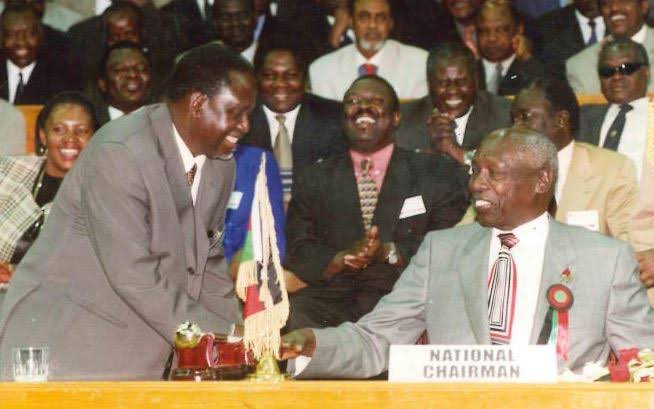
In June 2001, he merged NDP into Moi’s KANU party, a move called the “KANU Handshake”, which earned him the Energy Ministry. Critics called it a betrayal, while supporters viewed it as strategic positioning.
The alliance collapsed in 2002 when Moi selected Uhuru Kenyatta as successor. Raila then joined Mwai Kibaki in the NARC coalition, defeating KANU and ending 24 years of single-party rule, cementing his reputation as a political strategist.
Coalition govt
The 2007 elections plunged Kenya into ethnic violence, killing over 1,200 people and displacing 600,000.
The late Raila and President Kibaki signed the National Accord on February 28, 2008, under Kofi Annan’s mediation, creating the Grand Coalition Government.

As Prime Minister, Raila shared cabinet power, helped restore stability, and oversaw constitutional reforms, including the 2010 referendum.
Despite the coalition’s end in 2013, the template of power-sharing became part of Kenya’s political DNA.
Building Bridges Initiative
In 2018, after the Supreme Court annulled Uhuru Kenyatta’s 2017 election win, Raila boycotted the repeat poll and later clasped hands with Uhuru at Harambee House on March 9.
This handshake launched the Building Bridges Initiative (BBI), aimed at reducing ethnic tensions, reforming electoral processes, and strengthening devolution.
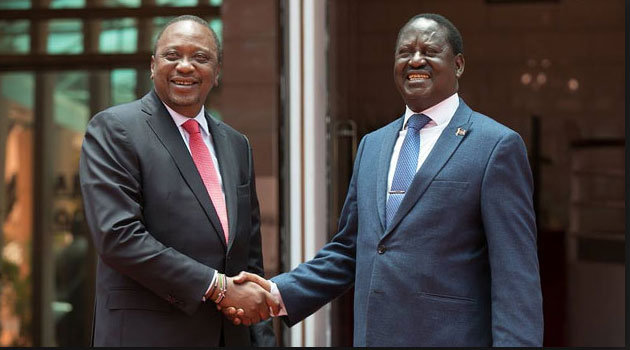
Though the High Court eventually blocked BBI in 2021, it calmed protests and shaped political dynamics for the 2022 elections.
Ruto alliance 2025
In March 2025, amid nationwide protests over taxation and economic pressures, the late Raila signed a Memorandum of Understanding with President William Ruto at KICC, merging ODM with Kenya Kwanza in a work-together pact.
Allies like Hassan Joho, Opiyo Wandayi, and John Mbadi received cabinet positions, while Ruto backed Raila’s AU Commission bid, which was unsuccessful.
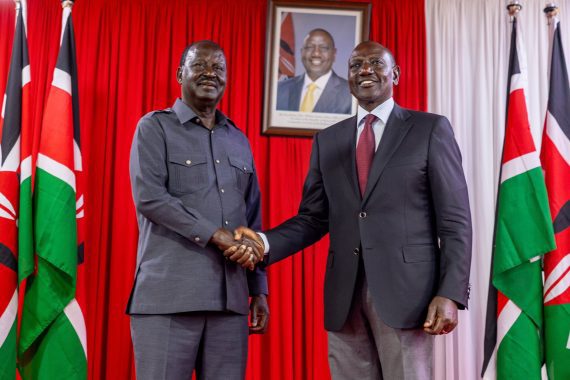
The move stabilised Ruto’s government but drew criticism for co-opting opposition voices. Raila defended it as a “broad-based government” for national unity, showing his enduring political influence.
Enduring legacy
The late Raila Odinga’s life was defined by resilience, pragmatism, and reconciliation. He survived detention, political setbacks, and five presidential defeats yet remained a central figure in Kenya’s politics.
Tributes from Kenya and the world recognised him as a bridge-builder, a peace architect, and a statesman.
At 80, he did not capture the State House, but the late Raila left a lasting mark on Kenya’s political landscape. His alliances, negotiations, and vision for national unity ensured that his influence would continue to shape the country for decades.
As Kenya mourns, his legacy as a strategist, negotiator, and champion of democratic stability remains unmatched.
Tributes and mourning
His death, confirmed after weeks of rumours, sparked widespread tributes across Kenya and the world. Leaders described him as a formidable statesman whose loss leaves a profound void.