Politician explains how fake sex video damaged her life and career
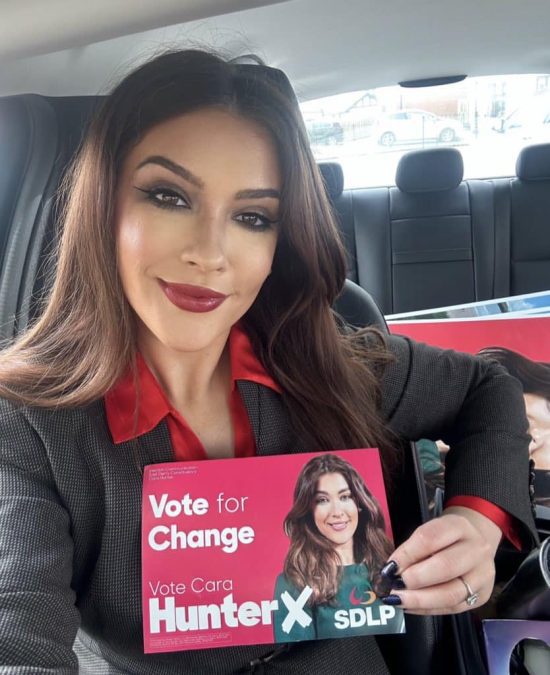
By The Guardian, December 1, 2025When Cara Hunter, the Irish politician, looks back on the moment she found out she had been deepfaked, she says it is “like watching a horror movie”.
The setting is her grandmother’s rural home in the west of Tyrone on her 90th birthday in April 2022.
“Everyone was there,” she says. “I was sitting with all my closest family members and family friends when I got a notification through Facebook Messenger.” It was from a stranger. “Is that you in the video … the one going round on WhatsApp?” he asked.
Hunter made videos all the time, especially then. It was less than three weeks before elections for the Northern Ireland assembly. She was defending her East Londonderry seat, campaigning, canvassing and debating.
Yet as a woman, this message from a man she didn’t know was enough to put her on alert. “I replied that I wasn’t sure which video he was talking about,” Hunter says. “So he asked if I wanted to see it.” Then he sent it over.
“It was extremely pornographic,” she says. “I won’t go into detail but I want you to understand what I had to compute.”
Even now, she says, she feels hot just thinking about it. The clip showed a blue walled bedroom with American plugs.
There was a woman who seemed to have her face. She was doing a handstand and having mutual oral sex with a man.
Hunter was looking at this while sitting with family in the middle of a heated election campaign.
At the same time, her phone was blowing up with message after message from strangers who had seen the video.
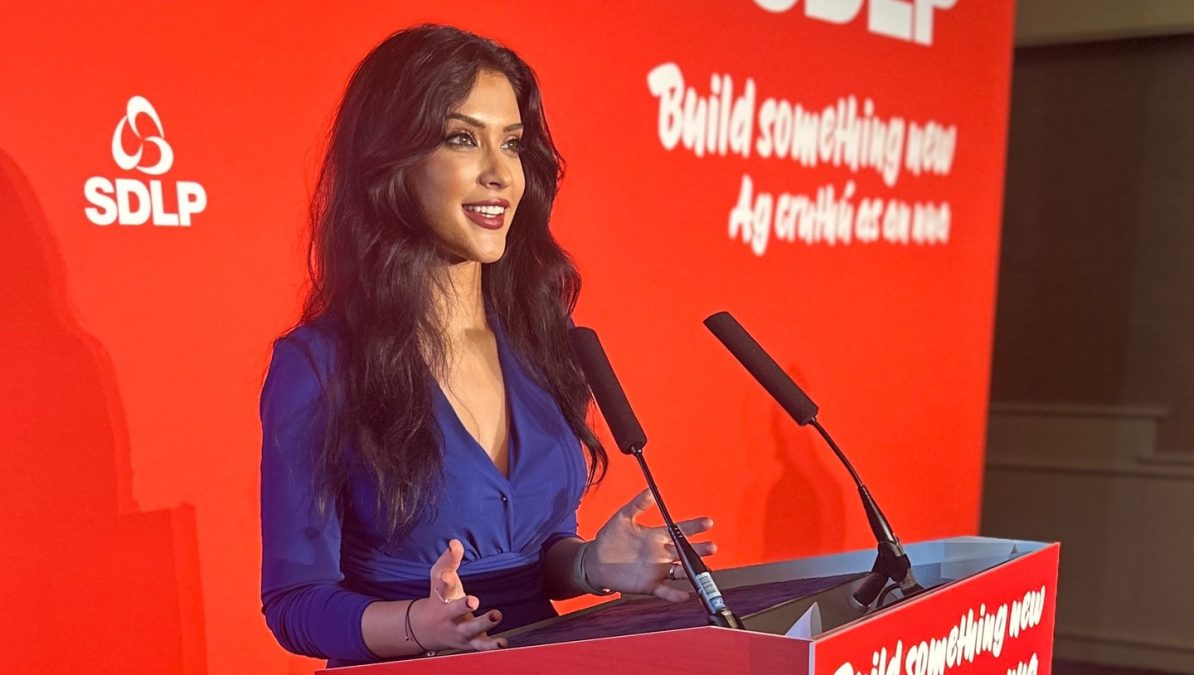
“All of them were just really vitriolic,” she says. “Those messages were from people who hate women.” Cara Hunter delivering her acceptance speech after being elected to the Northern Ireland assembly.
It is hard to fathom how unknown and “niche” deepfake pornography still was when this happened only three years ago. “The only altered images I really knew about at that time were Snapchat filters,” says Hunter.
Her initial reaction was confusion. “I wondered if this was a woman who looked similar to me.”
Then a friend asked if it could be a case where someone put her face on another person’s body. They Googled it, trying to find what it was called.
Since that time, the technology has come a frighteningly long way. “Now I have girls calling me telling me this has happened to them and ruined their lives,” she says.
“Recently one young woman told me it had happened to her and 14 others when they were under 18.”
Teachers also report spikes in nudification apps in schools. “The affordability and accessibility has increased tenfold.”
In England and Wales, new legislation has begun to address the issue. The Online Safety Act and the Data Use and Access Act 2025 have made sharing, creating or requesting deepfake intimate image abuse illegal. Northern Ireland also has plans to criminalise it. The consultation process closed in October.
Yet the public seems slow to understand the harm. Police research released last week shows one in four people still feel neutral or see nothing wrong with creating and sharing sexual deepfakes.

“I was shocked by that,” says Hunter.
“This is a world where falsified, sexualised images can ruin your life, your relationships, your reputation and career.” She sighs. “The normalisation of violence against women and girls cannot be overstated.”
For Hunter, now just turned 30, the weeks after the video’s release were “horrific”.
She did not know what to do. Should she issue a press release? Should she post a Facebook status? At 27, it was already difficult to be taken seriously politically.
Her party, the SDLP, advised her to ignore it. “They said we were two and a half weeks from an election. They warned that if I spoke out, my name would be linked with words like pornography.
People would see me sexually and would go looking for the clip.” They told her that if 10,000 people knew about the video then, 100,000 would know after her statement. “Those numbers are burnt into my brain.”
Hunter then went to the police. They informed her, apologetically, that no crime had been committed. They did not have the technology or expertise to investigate.
Hunter herself found the original video with the real woman’s face by using screenshots in reverse image searches.
When she tried to identify the person who circulated the deepfake on WhatsApp, she learned that the platform is encrypted and users have a right to privacy. “I’d like to think I have a right for my life not to be ruined,” she says.
“You’re one person up against the massive system of tech and coding.” Hunter with the DUP’s Gregory Campbell at the count for the Northern Ireland assembly in May 2022. Photograph Liam McBurney PA
Many memories from that period still feel mortifying. Her uncle arrived at her door after being shown the video by a friend. She had to sit him down and explain that it was fake. Later she had to explain it again to her father.
“Everywhere I went, people I used to speak to would cross the road to avoid me,” she says. She lives in a coastal town she is proud to represent.
A mile from her home is a bar. A few days after the video circulated, she decided to go there for a staff birthday. “I couldn’t let it consume me,” she says. On the way, a man approached her and asked her for oral sex. At the bar, the room fell silent when she walked in. “I realised it was a mistake.”
Despite fearing that silence would be seen as proof the video was real, she followed party advice and campaigned as usual.
She told her boyfriend, now her husband, that she did not care if she was elected. She only wanted it to be over. In the end, she won by just 14 votes, making it the most marginal seat in Northern Ireland.
Afterwards, she went public and became a key campaigner on deepfake intimate image abuse. Strikingly, she remains one of the few voices speaking out.
Many public figures, including MPs, have had similar experiences yet stay silent. Alexandria Ocasio Cortez in the US is one notable exception. Hunter understands why. “When a deepfake happens, you don’t want to draw more attention to it,” she says.
But she already felt such shame. “I couldn’t let all this cortisol shooting through my veins be for nothing. It felt like an ethical duty. It happened to me and I was in a position to help shape policies.” She had a voice and a platform, so she had to “go 100%”.
Politics was not the issue she planned to be known for. She grew up in Northern Ireland but spent a year in Boston at age 10 when her mother moved for work. Then, at 16, her family won the green card lottery and moved to California. “I could never have done my job without that time,” she says. American schooling helped build her confidence.
Her first career plan was journalism. But after her closest friend died by suicide, she investigated mental health in the ceasefire generation for her university paper. A politician she interviewed told her she should enter local government. At 24, the SDLP invited her to run for local council. She became the youngest woman deputy mayor of Derry City and Strabane. Two years later, after John Dallat died, she was co opted to the Northern Ireland assembly, where she was mental health spokesperson.
On the morning she took her seat, she learned she had a brain tumour. She was getting ready for Stormont when her GP called. “It is a pituitary tumour,” she says. “I am blessed it isn’t malignant and not large enough for radiotherapy.” But it can affect fertility and sight, so she wants others to know about the condition. Her symptoms were sore breasts and loss of menstrual cycle. A blood test revealed high prolactin. Treatment is daily medication. She was also told to avoid stress. “Your prolactin levels can spike when you’re under stress,” she says and laughs. A year later she was deepfaked.
She fears experiences like hers will deter young women from entering politics. “I have capable young girls on work experience and I don’t want them to think this is part of the political experience.” When she asks women to consider standing, she must ask several times. Men usually say yes immediately.
There is no doubt the deepfake affected the democratic process. It must have cost her votes. Women are the first victims of this technology. A 2023 study found that 98% of online deepfakes are pornographic and 99% of targets are women.
In what she calls “the AI Olympics”, future harms will go far beyond pornography. Deepfaked Joe Biden audio urging voters not to vote in the New Hampshire primary and the video of Zelenskyy telling troops to surrender are early examples. While the UK is tackling deepfake pornography, Denmark is trying to go further with copyright reform. The proposed law would guarantee everyone’s right to their own body, face and voice. Satire and parody would still be allowed. “If we could bring that in here, I’d say Hallelujah,” Hunter says. She also wants mandatory markings on all AI videos so people know what they are seeing. ‘Any time I ask a woman to consider standing, I have to ask three or four times’ … Cara Hunter. Photograph Polly Garnett The Guardian
Beyond politics, Hunter still thinks about the video. She still pictures the blue walled bedroom and the upside down woman almost every day.
“Even now, I wonder if I should offer £500 for information on who did this,” she says. “I need to understand. Is it personal? Do they hate me or hate women? Is it sectarian because I am a Catholic nationalist woman? Do people just see me doing well and think they should bring me down a few pegs?”
She is unsure about her political future. She is still on a high from her September wedding. “I get my wedding album back in December and I am counting down the days.” Her husband, Peter Eastwood, is not in politics but is the brother of former SDLP leader Colum Eastwood. “I always say at least politics found me my husband,” she says.
“We have an election in May 2027 and there is anxiety,” she says. “I am in the most marginal seat in the north and in the last election I was a porn star. So what is coming next?” Her parents want her out, especially with her pituitary tumour. “They have said nothing is worth my health. They tell me the abuse is unfathomable. I am running on cortisol and it is not safe.”
“But I love my job,” she continues. “I love being able to wake up, hear about an issue on Monday morning and take it to the minister on Monday afternoon.” That level of access is a gift. She pauses. “But there is always anxiety at the back of my mind. I just don’t know, is the honest answer.”