Justina Wamae faults new alcohol rules, says Kenyan-made drinks unfairly targeted
By Ascah Mwango, August 2, 2025Former Roots Party presidential running mate Justina Wamae has criticised the new alcohol regulations proposed by the Ministry of Interior, accusing the government of unfairly targeting local manufacturers.
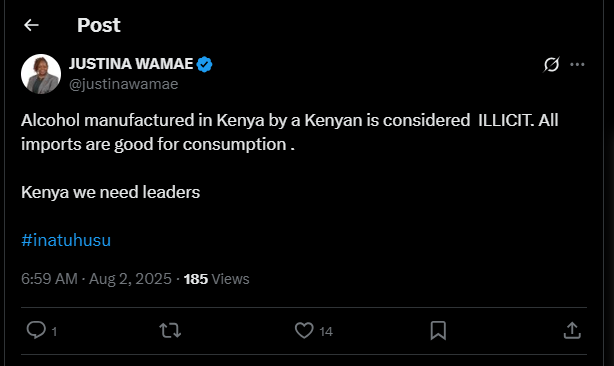
In a statement posted on her X account on Saturday, August 2, 2025, Wamae expressed concern that the policies seem to label locally-produced alcohol as illicit while giving a free pass to imported products.
“Alcohol manufactured in Kenya by a Kenyan is considered illicit. All imports are good for consumption. Kenya, we need leaders,” she stated.
Proposed roadmap
Her remarks come just days after the Interior Ministry unveiled a strict national policy aimed at curbing the rising cases of alcohol and drug abuse across the country.
According to the proposed policy, several changes are set to shake up the alcohol industry in Kenya. If passed, the law will ban online sales and home deliveries of alcohol, a popular convenience among urban dwellers. Hawking alcohol or selling it through vending machines will also be outlawed.
Supermarkets, petrol stations, restaurants, and shops located in residential areas or near schools will no longer be allowed to sell alcohol. The government also plans to raise the legal drinking age from 18 to 21 years.
Young people under 21 will not be allowed into alcohol-selling establishments, even if they are accompanied by adults. Moreover, customers carrying offensive weapons or accompanied by children will not be served alcohol.
The new policy goes further to target alcohol advertising and promotions. The National Authority for the Campaign Against Alcohol and Drug Abuse (NACADA) wants to ban the use of celebrities in alcohol promotions. This means musicians, actors, influencers, and other public figures will no longer be allowed to promote alcoholic beverages.
Only individuals aged 25 and above will be allowed to appear in alcohol-related adverts. These adverts will also be restricted from portraying drinking as something fashionable or desirable.
All forms of alcohol advertisements on television, radio, digital platforms, and even foreign channels will be banned between 5:00 am and 10:00 pm. Music videos, films, and other content showing alcohol or drug use in a positive light will also be restricted from being aired on TV, print, or online.
Alcohol advertising and sponsorships at youth-related events such as school functions, university events, sports tournaments, and art competitions will not be allowed. Outdoor alcohol billboards will face stricter regulations and will be banned from appearing within 300 metres of schools, hospitals, residential areas, and government buildings.
In addition to advertising, packaging is also under the spotlight. Manufacturers will be required to include full ingredient lists and clear health warnings on all bottles. The policy also proposes a minimum packaging size of 250 millilitres, in an attempt to eliminate the sale of cheap, small sachets and bottles, which are popular among low-income earners.
The licensing system for alcohol is also set for a major overhaul. Under the new proposal, only the national government will be allowed to issue licenses for alcohol manufacture, import, export, and distribution. The number and location of outlets selling alcohol will be tightly controlled, especially around schools and residential estates.
These sweeping changes have drawn sharp criticism from various quarters, who have raised concerns that local alcohol businesses are being unfairly targeted.