From Kibaki tosha to Tibim: Raila’s slogans that dominated Kenya’s political scenes
By William Muthama, October 15, 2025Raila Amolo Odinga, the unyielding “Agwambo”, transformed Kenya’s political theatre into a symphony of slogans and pithy, provocative phrases that ignited rallies, trended on social media, and seeped into everyday lingo.
Infused with Luo lore, Sheng swagger, and biblical bravado, these battle cries weren’t mere jingles; they were manifestos in miniature, rallying the marginalised against entrenched power.
From the triumphant “Kibaki tosha” to the weary “punda amechoka”, Raila’s lexicon dissected ethnic fault lines, economic gripes, and democratic droughts.
On Wednesday, October 15, 2025, the late Raila Odinga passed away in India at 80, leaving behind not only a political legacy but also a powerful arsenal of slogans that shaped Kenya’s political landscape.
The Power of ‘Hayaaa!’
No Raila rally was complete without his signature opener, “Hayaaa!” a thunderous exclamation that sliced through when starting his speech during his rallies, commanding silence.
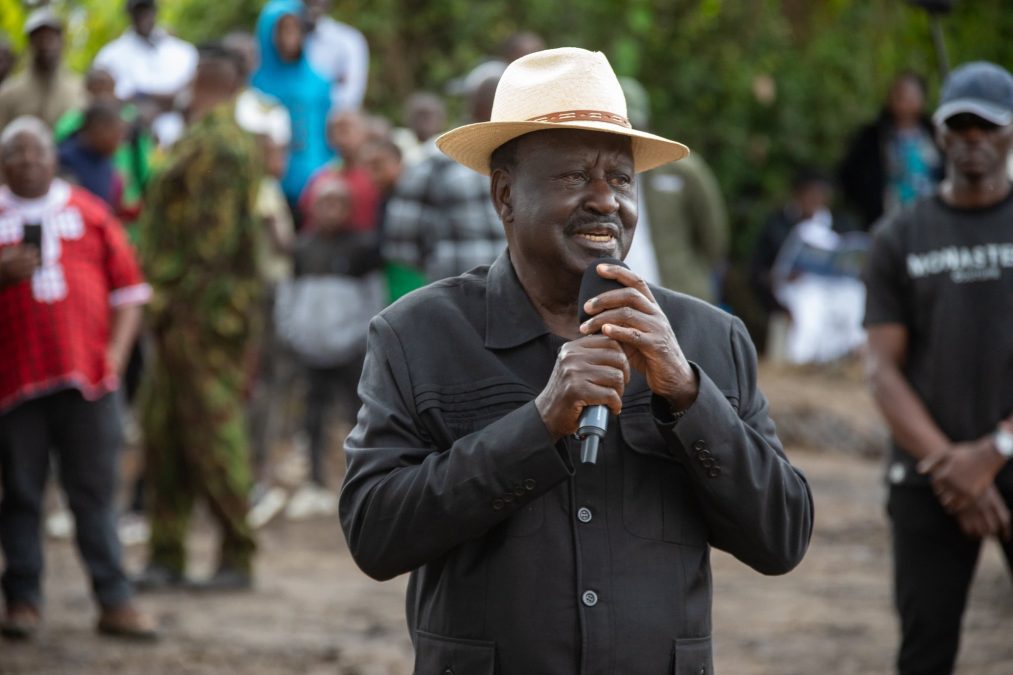
From the 1990s Saba Saba demos to his 2025 political hustings, Raila would stride to the podium, fist aloft, bellowing “Hayaaa!” to hush the throng and prime them for the onslaught.
Crowds erupted in response, turning venues into echo chambers of solidarity. Critics scoffed at its theatricality, but it humanised the enigma, making the “Enigma” feel like a family elder summoning kin.
Triumph with ‘Kibaki Tosha’
The 2002 polls, a KANU crucifixion, launched Raila’s slogan salvo. Bolting from Moi’s shadow, he turbocharged Mwai Kibaki’s NARC with ‘Kibaki tosha’, realigning Luo voters from tribal fealty to national reform.
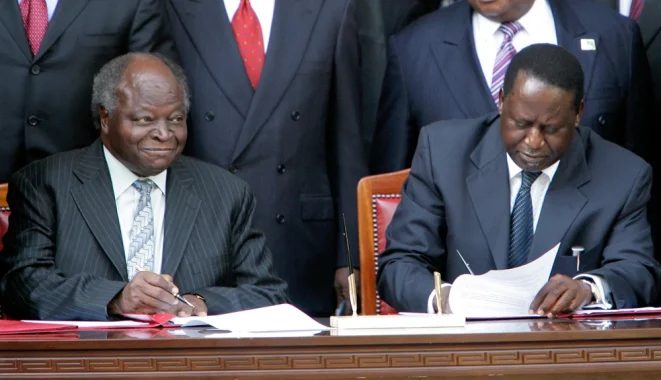
Billboards blared it; ballots bore it, clinching NARC’s 56% sweep and ending one-party rule. Raila laced it with ‘Kibaki na Mpira’, a soccer metaphor positioning himself as the pitch-perfect passer.
The era’s earworm? ‘Unbwogable’, swiped from Gidi Gidi Maji Maji’s smash, pulsing through youth veins and branding Raila the phoenix from Moi’s ashes.
‘Nusu mkeka’ and coalition survival
Violence scarred 2007, birthing slogans of survival. Post-poll carnage that felled 1,200, Raila’s ‘Nusu Mkeka’ demanded equity in the Grand Coalition.
Rooted in Luo custom, it sliced through negotiations with Kofi Annan mediating, pressuring Kibaki into equal cabinet shares, birthing Raila’s premiership and embedding power-sharing in Kenya’s constitution.
Yet, it masked brewing betrayals, as Raila later wept over “stolen” reforms.
‘Punda amechoka’ and exodus promises
Raila’s 2013 riposte, ‘Punda amechoka,’ lashed Jubilee’s graft and joblessness, echoing across opposition citadels.
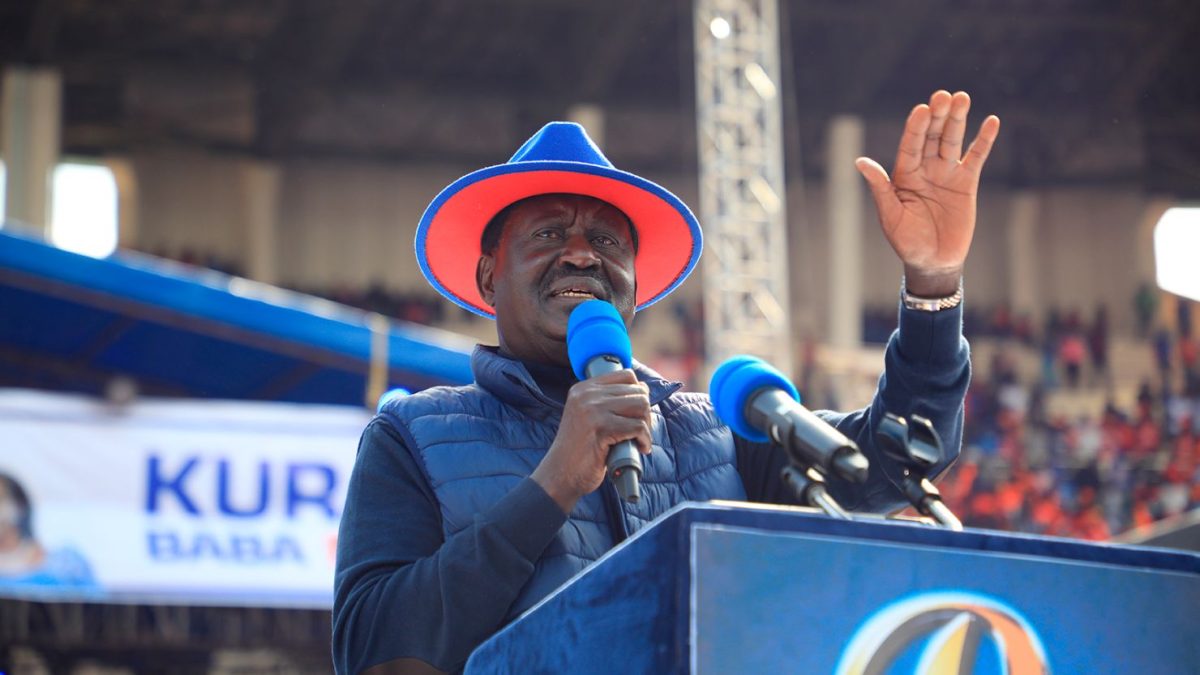
That year’s undercurrent? ‘Tunaenda Canaan’, a biblical exodus vow promising prosperity beyond Jubilee’s wilderness, blends faith with political strategy and frames Raila as a guide to a brighter future.
Digital defiance
The 2017 supernova? ‘Okoa Kenya’, a digital dynamite, Raila amplified via NASA, fuelling Supreme Court annulment and street protests.
The hypnotic ‘Tibim, Tialala, although coined by Babu was amplified by Raila, evoked unity in motion; paired with “Minji Minji” and ‘Riaaa,’ they turned campaigns into carnivals, electrifying the base and outshining Jubilee’s slogans.
Continuity and civic whistles
In his swan song, 2022’s Azimio odyssey revived ‘Firimbi’ the whistle of democracy, and ‘Inaendelea’, bridging BBI dreams and deriding Ruto’s ‘hustler’ narrative.
Even in 2025’s tax tumult, echoes of ‘Tibim Tialala’, although initially coined by Babu Owino, resurfaced in youth protests, showing Raila’s slogans endured beyond his lifetime.
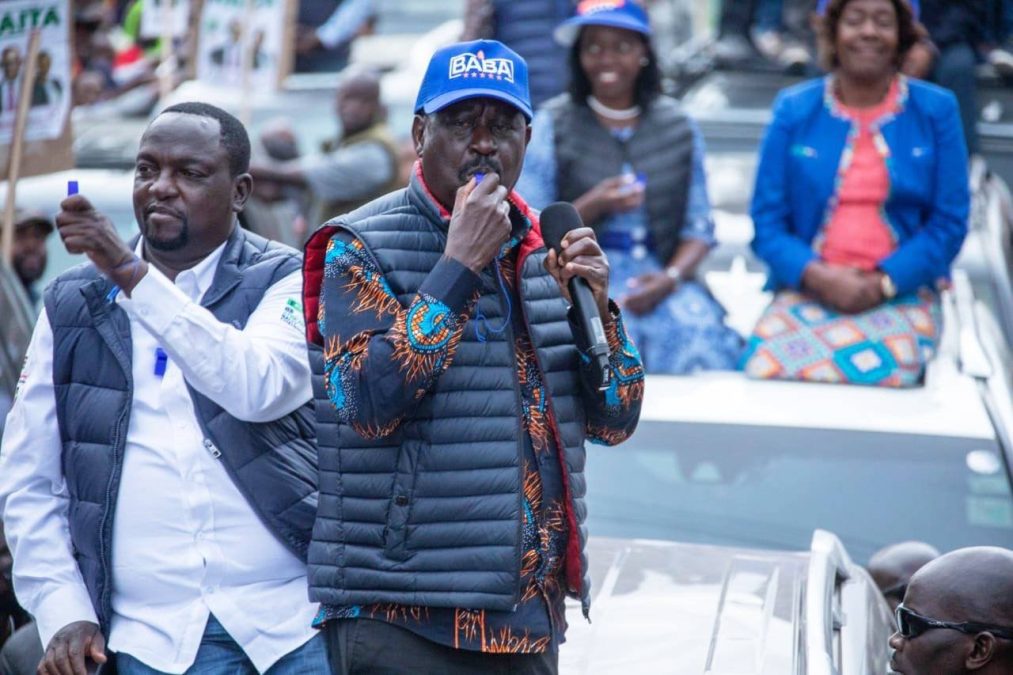
Raila’s slogans, criticised by some and praised by others, reflected Kenya’s problems: ethnic divisions, economic struggles, and youth frustration.
From ‘Tosha’ to ‘Mkeka’, they helped calm crises but didn’t solve all the underlying issues. After his death, social media combined ‘Unbwogable’ with mourning, with posts saying, ‘Hayaaa, but now silence’. As Kenya and the world continue to mourn “Baba”, these words are more than tributes; they are lessons.
Raila never became president, but his slogans inspired people and shaped Kenya’s politics. With him gone, the country feels the need for the next “Agwambo” voice.