Emotional moment as Winnie Odinga hands over Raila’s hat to her grieving mother
By Paulette Mboga, October 16, 2025A moving moment was witnessed on Thursday, October 16, 2025, as Winnie Odinga, the daughter of the late former Prime Minister Raila Odinga, handed over her father’s iconic fedora hat to her grieving mother, Ida Odinga.
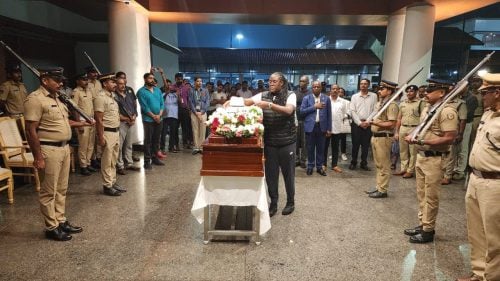
The emotional exchange took place shortly after the arrival of Raila’s body in Nairobi, marking one of the most touching scenes of the day.
Also Watch: Overwhelming crowd at JKIA forces military to abandon Raila’s reception plans
The photo, now circulating widely, shows Winnie squatting before her mother at the VIP section moments after the casket was received. Her head is bowed, her face lowered to the ground, as she gently hands over Raila’s white hat.
The hat had become a symbol that had become part of his identity over the years. Ida, seated and visibly heartbroken, accepts the hat in silence as they both appear deeply sorrowful.
Winnie has been in India in recent weeks, where her father was receiving treatment before his passing. When the news of Raila’s death broke, Ida, Raila Junior, and Rosemary were in Kenya, while Winnie and Raila’s sister, Ruth Odinga, were still in India handling arrangements for the return of his body.
Family unity
The emotional handover of Raila’s fedora represented more than just a family moment — it carried deep symbolic meaning. For many, the hat was not just a personal accessory but a powerful reminder of Raila’s image and legacy in Kenyan politics.
Handing it over to Ida was seen as a gesture of farewell and love, signifying the family’s unity even in the midst of grief. It was a private moment that quietly captured the pain of loss and the strength of a family bound together.
Raila Odinga’s fedora hat has long been associated with his public appearances and speeches, becoming a signature part of his persona. It symbolised leadership and humility. Values that defined his political journey.
The image of Winnie handing the hat to her mother stood out as one of the most powerful expressions of grief and remembrance. It marked not just the end of a political era but the beginning of the family’s personal journey of healing after the loss of a husband, father, and national figure.